


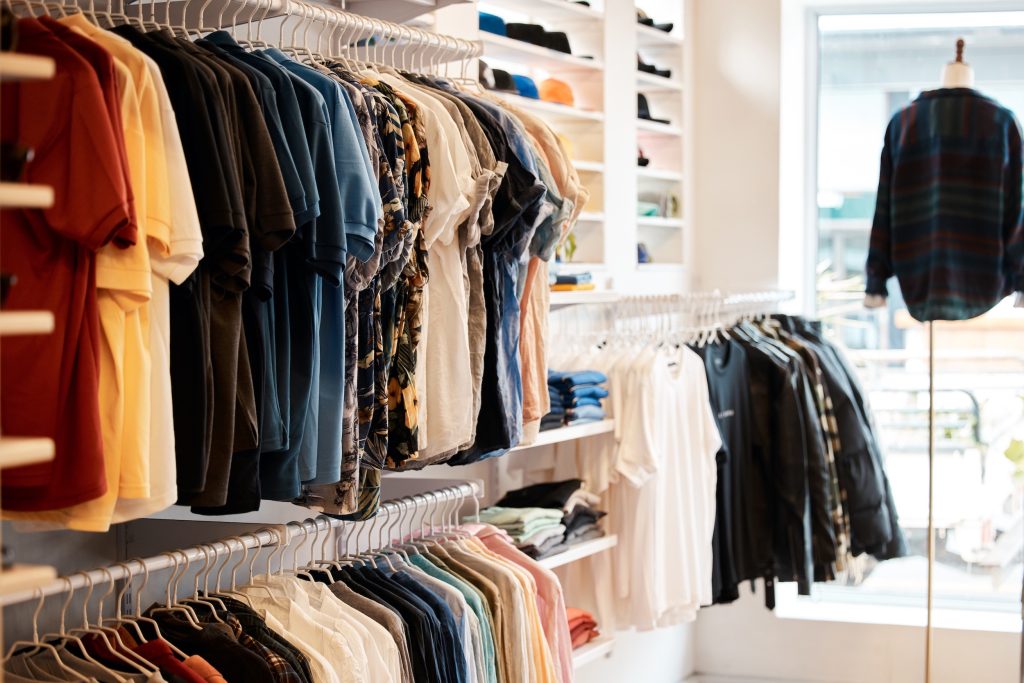
Starting or developing a clothing store always begins with one key question: where to source clothing for a store so that it can actually generate profit. There are several options – from working directly with manufacturers, through outlets and customer returns, to end-of-season stock and pallet auctions. However, it’s not just the purchase price that matters, but also quality, supply consistency, and achievable margins. You can source clothing for your store from wholesalers, outlets, customer returns, end-of-season stock, and directly from manufacturers. The most important factors when choosing a source are: quality, supply consistency, documentation, return policies, and real profitability. If you want to start quickly or expand your offer, outlet wholesalers (mixes, bundles, and pallets) are usually the most popular choice.
What determines the best sourcing option?
Where to source clothing for a store depends primarily on your business model. Different sources work better for boutiques, online stores, outlets, or second-hand shops. Your target audience, price range, seasonality, startup budget, and inventory turnover also play a key role. You should also consider how much variability in sizes or minor product defects you can accept.
| Source | What is it? | Advantages | Risks | Best for… |
| Clothing wholesaler | regular purchase of new products | predictability, consistency | lower price flexibility | boutiques, e-commerce |
| Outlet wholesaler | overstock, end-of-season items, returns | well-known brands, good margins | variable availability | outlets, e-commerce, retail stores |
| Customer returns | mixed products from returns | low entry cost | selection required, possible defects | outlets, mix sellers |
| Pallet auctions | bulk purchase via auctions | good deals, scale | random product mix | experienced buyers |
| Manufacturer / brand B2B | direct sourcing | full control over offer | entry thresholds, formalities | larger stores |
| Import | goods sourced abroad | wide selection | long lead time, quality risks | private labels, larger sellers |
| Local / consignment | local resale | flexibility, low entry barrier | limited scale, inconsistency | small stores, testing the market |
There is no single best source. The key is matching your sourcing model to how your store operates and who your customer is.
Where to source clothing for an outlet?
In practice, outlets rely on end-of-season stock, overstock, customer returns, and products with minor defects. This is a different model than selling new collections: here, rotation, flexibility, and the ability to manage variable inventory are crucial. That’s why people asking where to source clothing for an outlet usually turn to outlet wholesalers, mix packages, returns, and pallet auctions.
Outlet: where does the stock come from?
| Source | Typical features | What to watch out for? |
| End-of-season stock | new items with limited availability | incomplete size ranges |
| Overstock | branded goods in larger batches | stock variability |
| Customer returns | wide mix of brands and categories | requires sorting |
| Pallet auctions | fast bulk purchasing | higher unpredictability |
How to calculate profitability? (simple margin model)
A low purchase price alone is not enough. To assess profitability, you need to include: cost of goods, logistics, losses from sorting, fixed costs, expected selling price, and inventory turnover. This is where you determine whether your products actually generate profit. The common mistake “cheap = best” often happens when you ignore the time needed to sort, describe, and prepare products for sale.
Profitability calculation – what to include?
| Cost component | What does it include? | Common mistake |
| Product cost | price of batch, package, pallet | focusing only on price per kg |
| Logistics | transport, unloading, storage | ignoring delivery costs |
| Sorting & losses | defects, rejects, incomplete sets | no buffer for waste |
| Fixed costs | staff, rent, online store | ignoring operational costs |
| Turnover | sales speed | overestimating sales performance |
Startup model: one supplier or multiple sources?
At the beginning, it’s safer to work with one reliable supplier or at most two sources. This makes it easier to control quality, logistics, and consistency. Diversification gives flexibility, but too many sources too quickly often create chaos. The most reasonable approach is 1–2 sources first, then scaling gradually.
Example path for beginners: step by step
- define your store concept and target customer,
- decide whether you want to sell new, outlet, or used clothing,
- set your budget and initial purchase scale,
- choose a supplier based on quality, documentation, and terms,
- order a test batch,
- sort and prepare product descriptions,
- analyze sales, returns, and customer interest,
- scale only the categories that actually sell.

Common mistakes when sourcing clothing
- buying blindly without clear quality criteria,
- lack of documentation and reputational risks,
- too wide assortment at the beginning,
- no seasonal planning,
- incorrect logistics and time estimation,
- mixing outlet and second-hand without clear communication.
Where does cooperation with a B2B outlet wholesaler fit in?
For many sellers, a B2B outlet wholesaler is the easiest answer to the question where to source clothing for a store. This model allows for a faster start, access to a mix of brands, proper documentation, and scalability. However, availability is variable, so clear quality standards and good communication with the supplier are essential.
In the case of Stock-Hurt, cooperation is based on a B2B model with minimum orders starting from 20 kg. The offer includes grades A, B, and C, with a strong focus on outlet grade B. Stock-Hurt serves clients from multiple countries and languages, and pallet auctions are one of the most popular options.
Want to learn more about cooperation opportunities? Contact us and stay up to date with upcoming auctions!
FAQ
Where to source clothing for a store when starting out?
Usually from one reliable wholesaler to minimize chaos and better assess profitability.
Where to source clothing for an online store?
From a supplier that offers consistent deliveries, proper documentation, and products that are easy to describe and photograph.
Where to source clothing for an outlet?
Mainly from outlet wholesalers, customer returns, end-of-season stock, and pallet auctions.
How to check if a supplier is reliable?
Check company details, sales documents, return policies, product photos, and overall cooperation terms.
Are customer returns a good sourcing option?
Yes, but only if you have time and processes for sorting and accept quality variability.
How to calculate profitability of wholesale purchases?
Calculate total cost, logistics, losses, fixed costs, and compare it with realistic selling prices and turnover.


